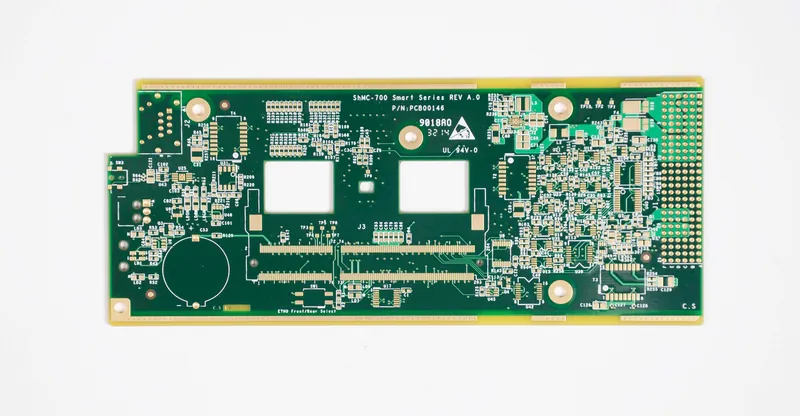
AI did not just raise PCB demand — it changed the product
The average AI server motherboard went from roughly 18 layers in 2023 to 32 layers by 2025, and high-end AI and GPU boards now reach 40 to 90 layers. Higher layer count means more laminate per board, more lamination cycles, tighter registration, and longer build time per panel. In other words, AI is not simply buying more PCBs; it is buying the most material-intensive, capacity-hungry boards in the industry, and it is doing so at hyperscale volume.
Why one AI server eats 10-15x the material
A conventional server uses a relatively small, standard-layer-count board. An AI server stacks multiple high-layer-count boards — the motherboard, GPU carrier boards, interconnect and switching boards — each large-format and high-density. Industry estimates put AI server PCB material consumption at 10 to 15 times that of a standard server. With AI data-center build-out running at full pace, high-layer-count and high-end CCL supply is being pulled away from every other application, from industrial to consumer to telecom.
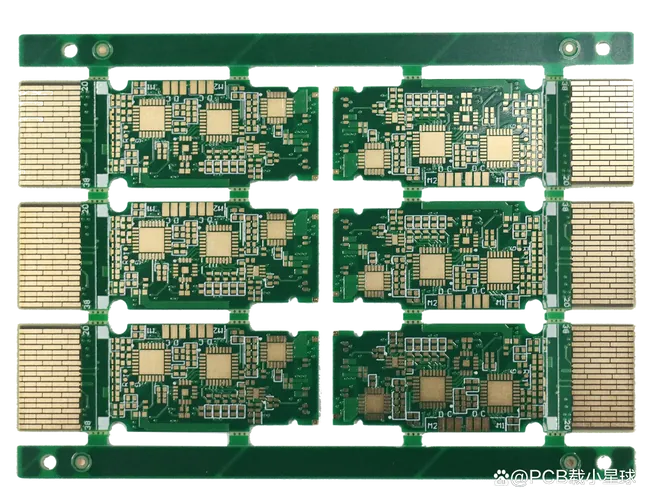
The numbers behind the squeeze
By mid-2026 the numbers are stark. Cumulative price increases on standard FR-4 laminates have reached about 134%, with prepreg surging even more; the CCL composite price index, at 153.2 in March 2026, is projected to climb toward 246.8. High-end PCBs for AI servers are reportedly priced above USD 5,000 per board in some cases, and the global CCL market has crossed roughly USD 16 billion. Korean and Taiwanese laminate and PCB makers are expanding capacity, but those lines are aimed largely at the AI tier and take 18-24 months to come online — which does little for buyers of mid-layer industrial, consumer, or telecom boards in the near term. PCB capacity is now cited as a genuine bottleneck on AI data-center growth itself.
Who is actually getting squeezed
The most affected buyers are not the AI giants (they hold long-term capacity reservations) — it is everyone else. Buyers of 2-8 layer industrial boards, mid-layer consumer and telecom boards, and quick-turn prototypes are finding longer lead times, higher prices, and occasional material allocation, because their normal material is being diverted to high-margin AI builds. The squeeze was further compounded in early 2026 by broader supply-chain disruption — resin, copper, and related inputs all came under pressure — which pushed PCB prices up sharply in a matter of weeks. If your program is not AI-scale, you are competing for the material and capacity that is left over after the AI tier has taken its share.
How to protect non-AI supply in a tight market
Three practical moves. First, talk to your fabricator about material flexibility — the exact laminate grade you have always used may be the one AI is pulling; a qualified alternative may have better availability. Second, plan earlier and commit volume rather than spot-buying each PO; suppliers protect buyers who give visibility. Third, use a fabricator with multiple sites, because allocation pressure is not uniform — one factory may have material and capacity where another is queued behind AI orders.
The China & Vietnam multi-site advantage when capacity is scarce
A fabricator qualified in both China and Vietnam has two separate capacity pools and two material-supply relationships, which materially improves the odds that at least one site can take your build on schedule. It also lets you shift volume if tariff or allocation pressure favors one country in a given quarter. For buyers who are not AI-priority at mega-factories — EMS companies, industrial and consumer OEMs, sourcing teams — a dual-site manufacturer that takes prototypes through high volume is often a better fit than waiting behind AI allocation. Inorsen runs PCB fabrication across China and Vietnam under one UL/ISO/IATF system and can confirm which site has the material and slot for your build — from samples to mass production.

What to send to get a real lead-time answer
In a shortage market, vague RFQs get vague answers. Send complete Gerbers, the stackup (especially layer count and material spec), the surface finish, copper weight, and the quantity split between prototype and mass. State the required ship window honestly. With that, a capable fabricator can tell you whether the build fits this week, which site can run it, and what material is available — instead of a generic quote that falls apart when you try to place the order.